A plain-English review of 4RABET registration fields seen in public interface material, with KYC, personal-data and clone-page safety context for India.
Registration Interface Overview
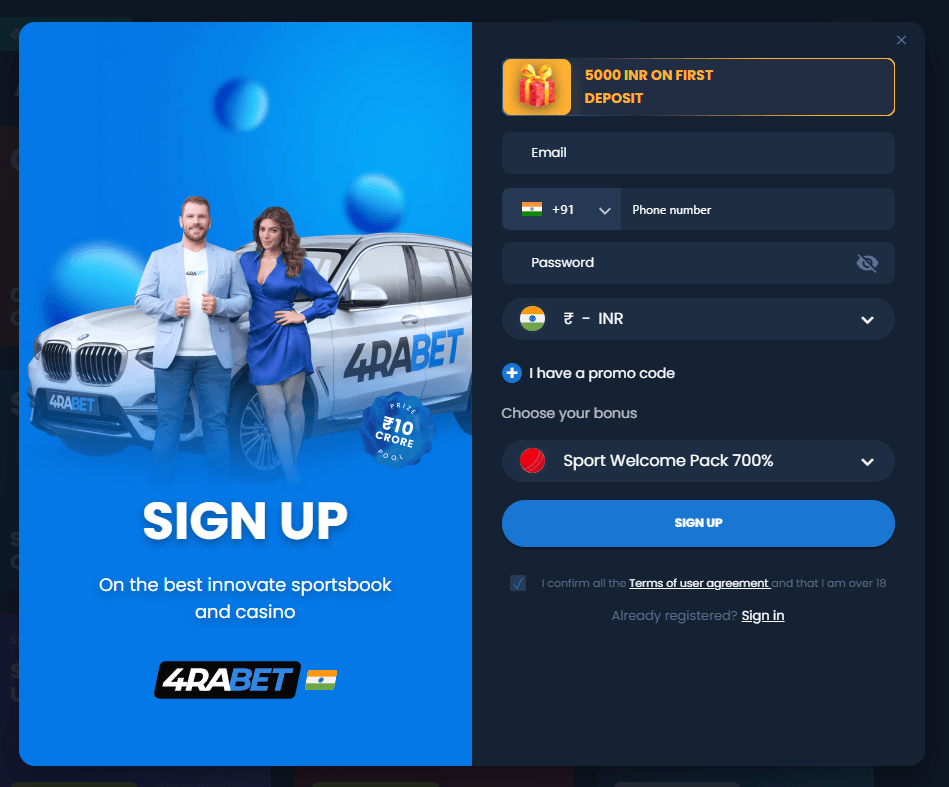
Public 4RABET registration material generally presents a short account-creation panel rather than a long profile form. The recurring labels are contact details, a password, a country or dial-code selector, a currency label and a terms acknowledgement. Those labels are useful for recognising the type of screen being discussed, but they are not proof that a current India account route is available.
This page uses a static local reference graphic instead of a copied sign-up screenshot because many available images mix account fields with strong marketing panels or action buttons. The point is to document the field pattern without turning the page into an account-opening prompt.
The safest way to read registration material is to ask three questions: who published it, when it was reviewed and whether it separates field evidence from account-opening instructions. If those answers are missing, treat the claim as incomplete.
Field layout based on publicly documented 4RABET registration screens.
Field evidence
Observed Fields
The table separates what has appeared in public interface material from what remains sensitive or unverified.
Registration-field reference for 4RABET public material
Field group
Status
Why it matters
Reader caution
Email or phone
Observed
Used as a contact or account identifier.
Do not type it into a lookalike domain.
Country code
Observed
May appear beside phone entry.
A country selector is not a legal-availability statement.
Password
Observed
Controls account access if used on a verified service.
Use a unique password and never share it by message.
Currency
Historical
Older public material has shown INR-style currency context.
Current payment support still needs verification.
Terms acknowledgement
Reported
Usually appears near account creation.
Read the current terms on any verified external service.
Personal data
KYC and Personal Data
Account verification can involve more than the registration form. Public guides and common account-review flows discuss identity documents, address evidence, payment ownership and privacy checks. Those items are highly sensitive because a wrong upload destination can expose a passport, Aadhaar-related material, PAN details, bank records or wallet information.
Before sending documents to any external service, confirm the exact hostname, read the privacy notice, avoid private-message upload requests and keep a private note of the date, domain and reason for the request. Do not send identity files, account screenshots or payment proof to 4rabet.xin.
Personal data should be shared only when the source is verified and the request is proportionate. A form that asks for more information than the stated review needs should be treated with caution.
Document types that may be requested during account-verification reviews.
Evidence Table
How this page treats registration claims
Claim type
Use on this page
Current India status
Visible field label
Recorded as interface evidence.
Not a current account-opening confirmation.
Currency label
Recorded only as historical context.
Payment availability is not verified.
KYC description
Explained as a privacy and ownership risk area.
Exact current process is not verified.
Third-party guide claim
Used only when the wording is narrow and dated.
Requires independent checking before reliance.
Clone and Phishing Warning
Registration pages are easy to copy. A cloned page can reuse colours, a logo image and familiar field names while sending data to an unrelated party. Warning signs include misspelled domains, fresh links shared in chat groups, pressure to verify immediately, requests for OTPs and instructions to pay a fee before an account is unlocked.
If you compare an unfamiliar page with this 4RABET guide overview, use the comparison only to identify field patterns. Do not treat a visual match as proof that a page is official, lawful, current or safe.
Keep recovery email, mobile number and identity files separate from ordinary browsing. A copied registration screen can collect enough information to attack other services that reuse the same phone, email or password pattern.